- 1. How to Choose the Right Wall Cladding
- 2. 3D Cementitious & Concrete Wall Tiles
- 3. Natural Stone Veneers & Slate Strips
- 4. Wooden Slat Paneling & MDF Fluting
- 5. Large-Format Porcelain Slabs & Ceramics
- 6. Wall Vinyl & Eco-Friendly Bamboo Panels
- 7. Comparative Table: Room vs. Water Resistance vs. Cleaning
- 8. Frequently Asked Questions (FAQ)
1. How to Choose the Right Wall Cladding
Upgrading a single accent wall is one of the most effective ways to transform room acoustics, visual volume, and spatial temperature without major structural work.
However, selection should not rely solely on aesthetics. Practical variables such as moisture exposure, direct sunlight exposure, ease of cleaning, and impact resistance dictate long-term durability.
2. 3D Cementitious & Concrete Wall Tiles
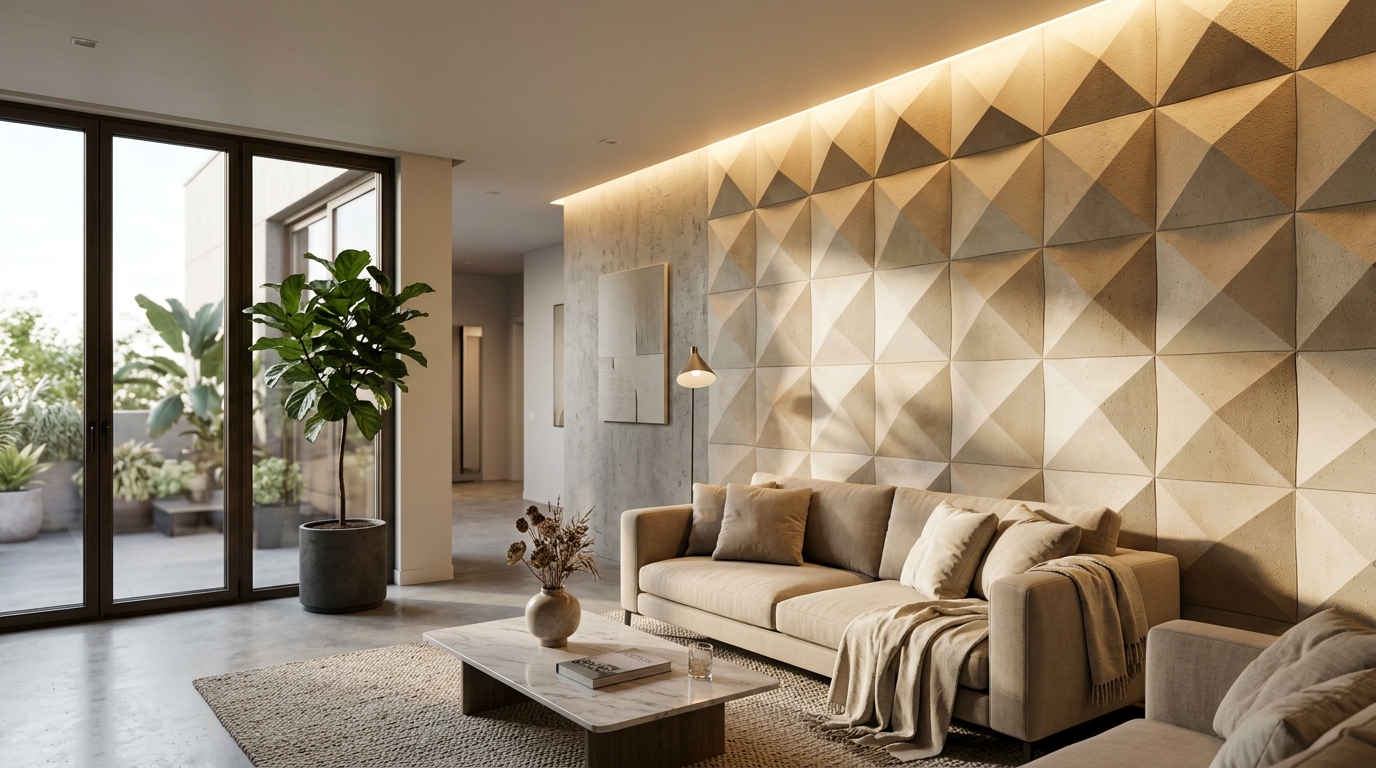
Manufactured from precast concrete enriched with mineral aggregates, 3D cementitious cladding creates dramatic architectural depth with geometric low and high reliefs.
- Best Applications: Accent walls in living rooms, entry foyers, and TV backdrops.
- Benefits: Exceptional structural durability, dimensional stability, and rich tactile shadow play when paired with grazing LED lighting.
- Important Note: Heavy tiles requiring specialized mortar adhesives and clear water-repellent sealing to protect porous surfaces.
3. Natural Stone Veneers & Slate Strips
Stacked natural stone strips (slate, quartzite, and stacked ledger stones) introduce biophilic warmth and organic luxury indoors.
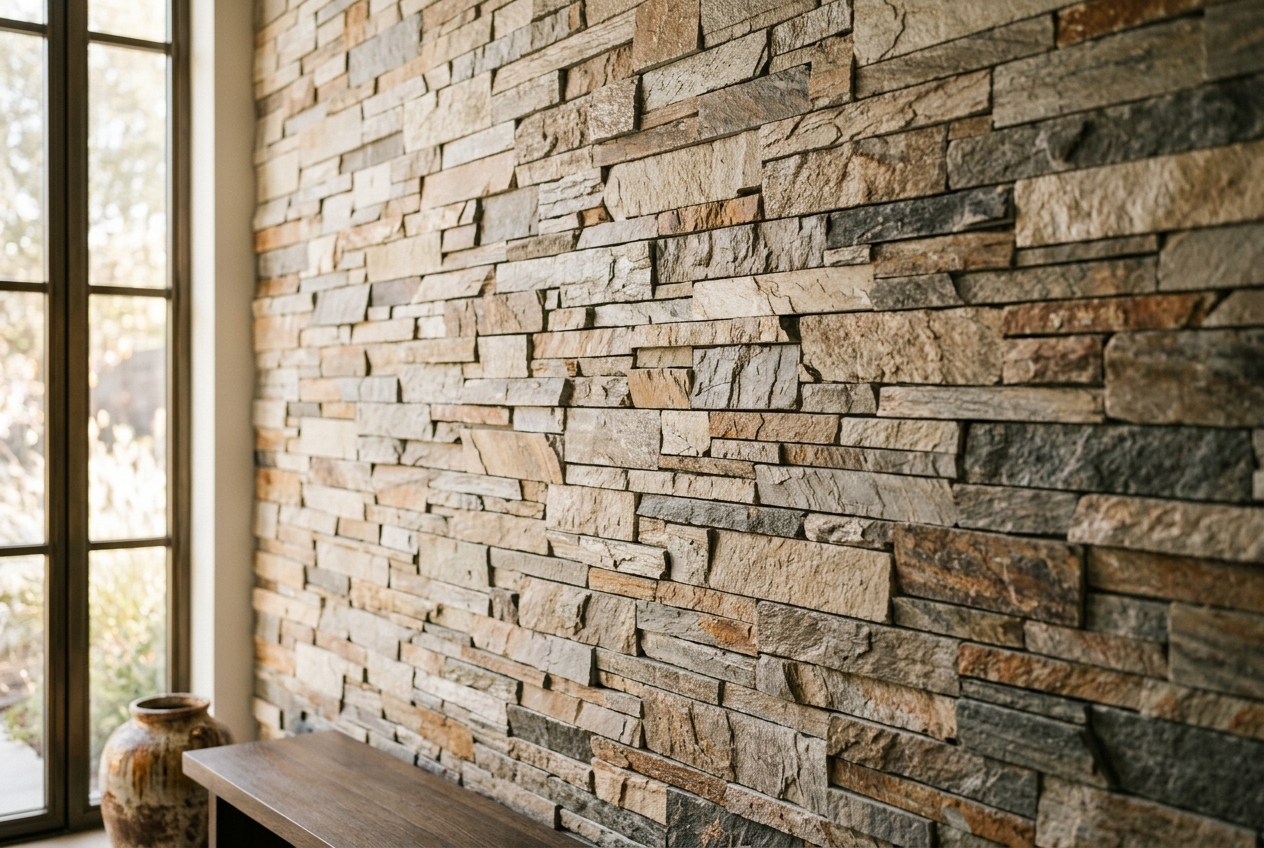
Horizontal natural stone cladding creating tactile mineral relief and timeless organic elegance.
- Aesthetics: Every stone slab has unique shade variations, granting timeless sophistication.
- Recommended Spaces: Dining room feature walls, covered patios, and indoor courtyards.
- Maintenance: Periodic sealing every 2 years prevents moisture absorption and dust staining.
4. Wooden Slat Paneling & MDF Fluting
Vertical wood slat paneling has become a mainstay in modern architecture. It visually elevates ceiling heights while enhancing room acoustics.
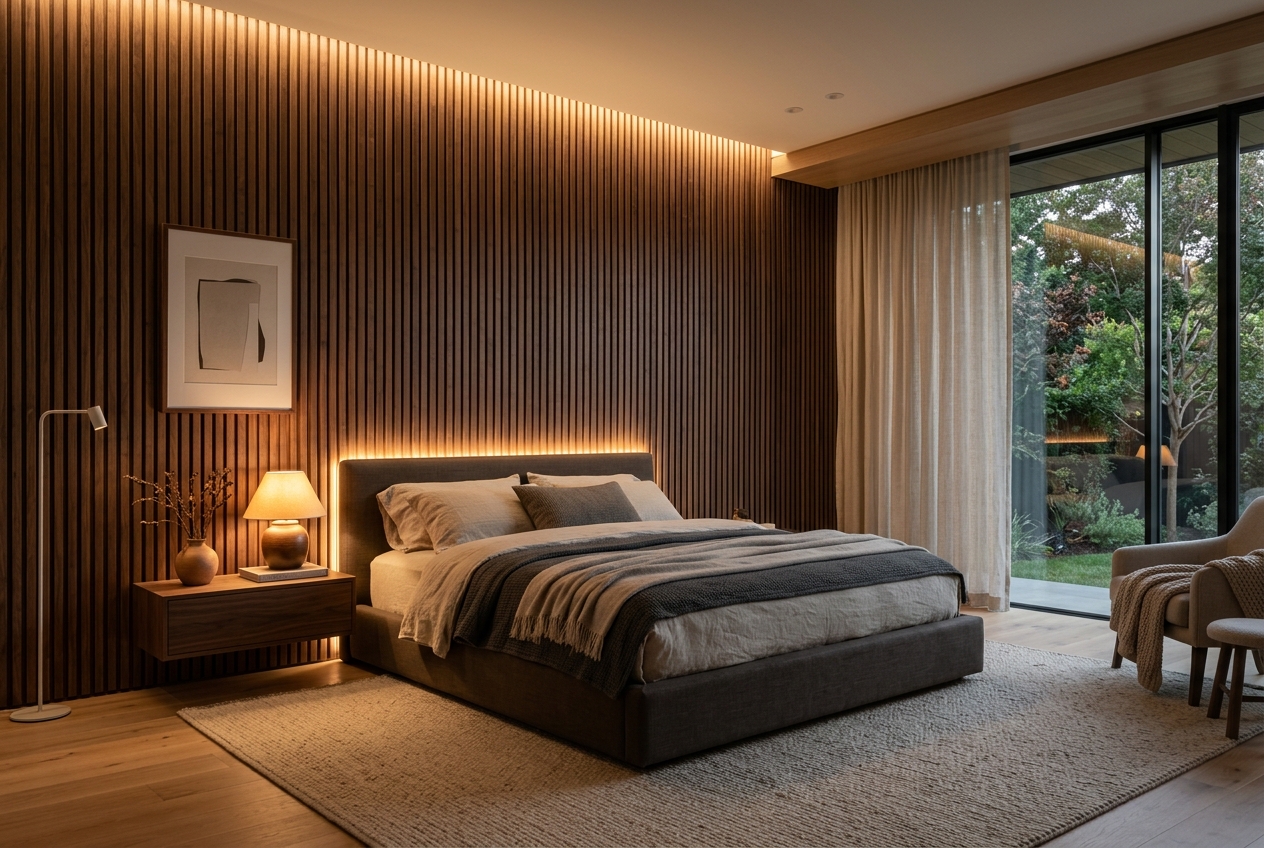
Walnut wood slat headboard wall with concealed indirect lighting blending Japandi aesthetics and acoustic comfort.
- Solid Wood vs. MDF: Solid hardwoods (walnut, oak) withstand mechanical wear and covered outdoor terraces. Fluted MDF paneling offers a lightweight indoor alternative for bedrooms and home offices.
- Cleaning: Maintain with dry dusters or micro-damp cloths, avoiding harsh chemical cleaners.
5. Large-Format Porcelain Slabs & Ceramics
Large-format porcelain slabs (e.g. 48x48 in or 48x110 in) create seamless wall surfaces with minimal grout lines.
- Water Resistance: Near-zero water absorption (≤ 0.5%), making porcelain the gold standard for bathrooms, shower enclosures, and kitchen backsplashes.
- Finishes: Perfectly mirrors rare marble, raw concrete, rusted steel, and quartzite.
6. Wall Vinyl & Eco-Friendly Bamboo Panels
For mess-free renovations, peel-and-stick vinyl wall planks and washable bamboo fiber boards offer fast DIY application.
- Easy Installation: Glued directly onto smooth drywall surfaces without heavy tools.
- Thermal Insulation: Vinyl and plant fibers remain soft and warm to the touch.
7. Comparative Table: Room vs. Water Resistance vs. Cleaning
Reference the technical matrix below to select the right cladding material for your project:
| Cladding Type | Best Suited Spaces | Water Resistance | Ease of Cleaning | Cost Level |
|---|---|---|---|---|
| 3D Cementitious Tiles | Living Room, Foyer, TV Wall | Moderate (Requires Sealer) | Moderate | Medium to High |
| Natural Stone Veneer | Dining Room, Patio Wall | High (If Sealed) | Moderate | High |
| Wood Slat Paneling (MDF) | Bedroom, Office, Living Room | Low (Dry Spaces Only) | High (Duster) | Medium |
| Porcelain Slabs | Bathroom, Kitchen, Facade | Excellent (≤ 0.5% Absorption) | Excellent (Damp Cloth) | High |
| Wall Vinyl Planks | Bedroom, Powder Room | Moderate (Splash Resistant) | Excellent | Low to Medium |
8. Frequently Asked Questions (FAQ)
What is the best wall cladding for damp or high-humidity areas?
Low-porosity porcelain slabs and glazed ceramic tiles are the safest materials for direct moisture contact. If dealing with rising damp from foundations, structural waterproofing must be performed prior to wall installation.
Do 3D concrete wall tiles need painting?
Painting is optional. You can keep the natural grey or sand concrete finish or apply latex paint. Applying a clear water-repellent sealer is mandatory to prevent dust accumulation inside surface pores.
How do you pair wall cladding with room lighting?
Textured materials (3D concrete, stone, or slats) reach full potential when paired with grazing lighting (concealed LED strips along ceiling drops) or upward floor spotlights to highlight physical relief without glare.
Visualize Different Wall Claddings in Your Room with AI
Upload a photo of your space to the Arquitet IA app to test 3D cement tiles, natural stone veneers, and wood slat paneling in seconds with Artificial Intelligence.
Try Arquitet IA App