- 1. The Core Principles of Lighting Design
- 2. Color Temperature: Understanding Kelvin Degrees (K)
- 3. COB vs. SMD LED Strips & Spotlight Fixtures
- 4. Wall Grazing Light: Highlighting Textures
- 5. Color Rendering Index (CRI) & Room Lux Calculations
- 6. Room-by-Room Lighting Comparison Matrix
- 7. Frequently Asked Questions (FAQ)
1. The Core Principles of Lighting Design
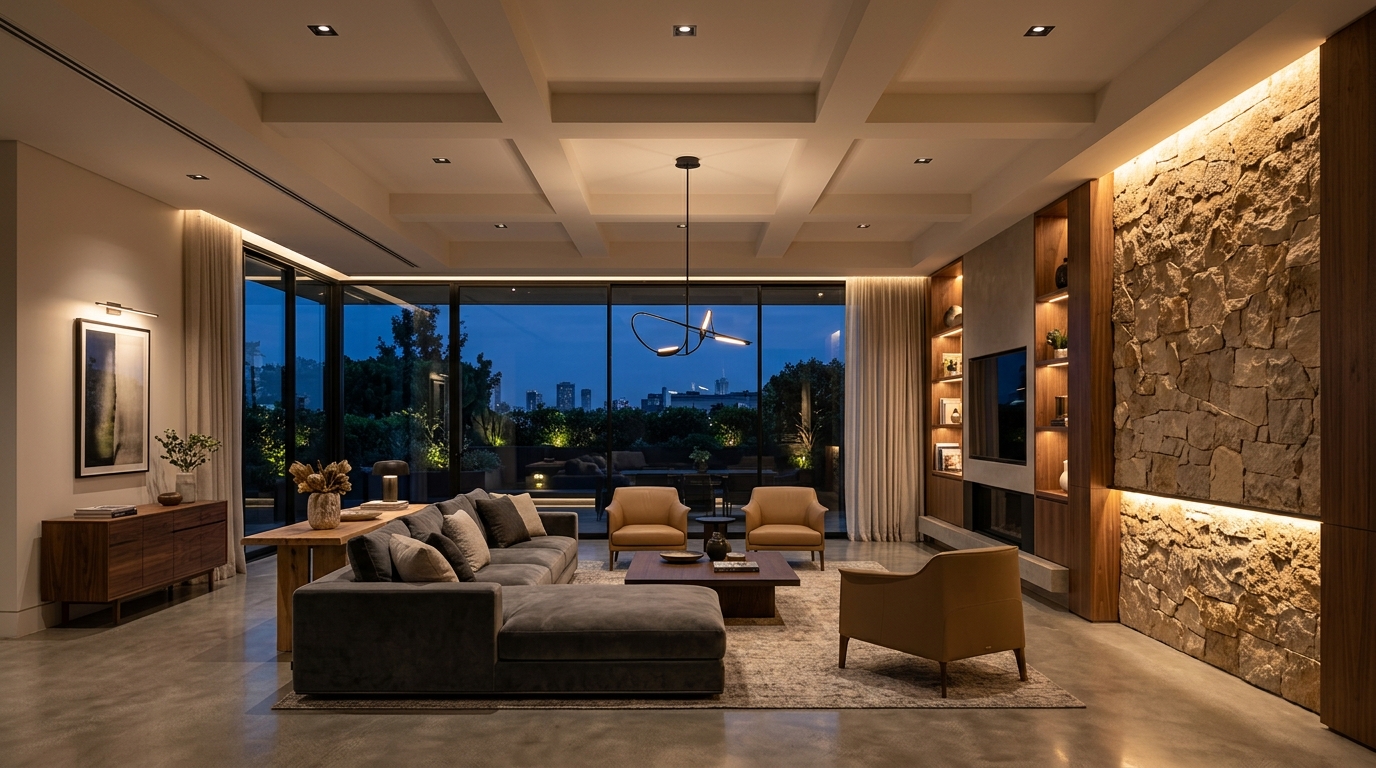
Lighting design dictates spatial volume, material perception, and emotional mood within a home. Poorly planned illumination flattens architectural depth and turns cozy spaces into cold, uncomfortable environments.
2. Color Temperature: Understanding Kelvin Degrees (K)
- Warm Light (2700K - 3000K): Golden amber glow encouraging relaxation. Perfect for living rooms, bedrooms, and dining spaces.
- Neutral White (4000K): Crisp natural white light maintaining true color perception. Recommended for kitchens, work desks, and bathrooms.
- Cool White (5000K - 6500K): High-intensity blue-white light triggering alertness. Strictly reserved for utility rooms and garages.
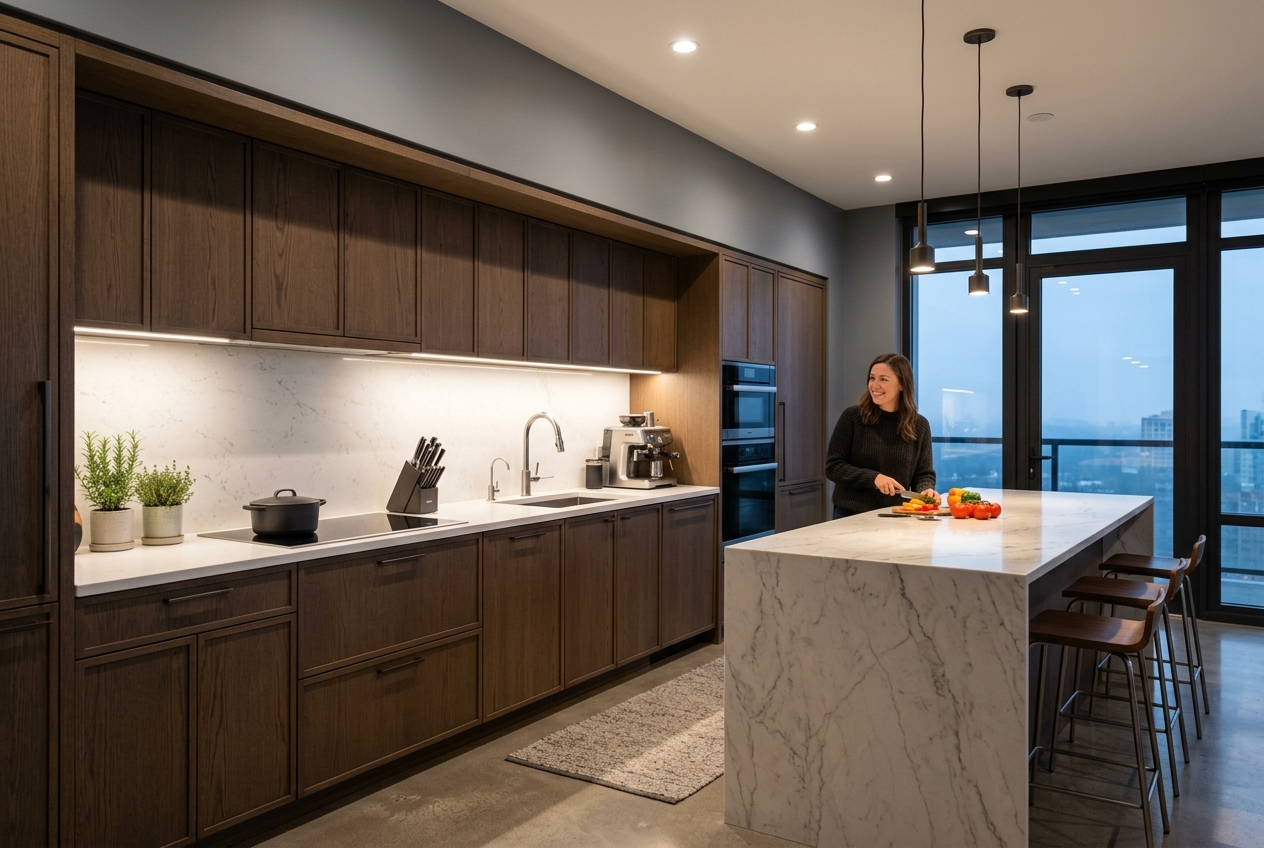
4000K LED task lighting mounted under kitchen cabinets for shadow-free countertop prep work.
4. Wall Grazing Light: Highlighting Textures
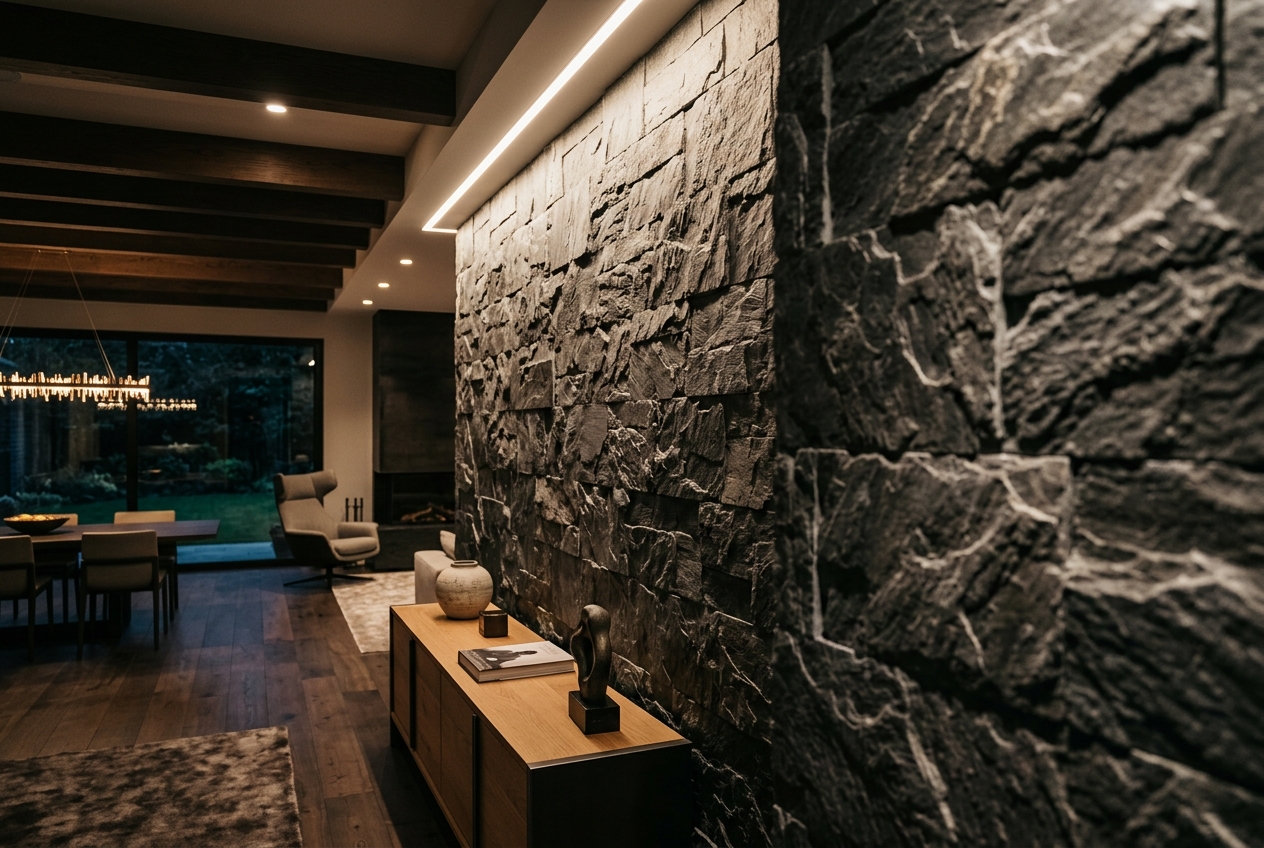
Warm 2700K grazing LED light accentuating natural slate stone texture.
6. Room-by-Room Lighting Comparison Matrix
| Room Space | Color Temperature (K) | Target Lux Level (Lux/m²) | Recommended Fixture Type | Sensory Goal |
|---|---|---|---|---|
| Living Room / TV Area | 2700K - 3000K (Warm) | 150 - 200 Lux | Concealed LED Cove + Low-Glare Spots | Cozy relaxation |
| Primary Bedroom | 2700K (Warm) | 100 - 150 Lux | Indirect Sconce + Headboard LED | Sleep induction & rest |
| Kitchen Countertops | 4000K (Neutral) | 400 - 500 Lux | Under-cabinet LED Strip + Diffused Plafond | Task precision & focus |
| Home Office / Desk | 4000K (Neutral) | 300 - 400 Lux | Linear Diffused Profile + Task Lamp | Concentration without eye strain |
| Bathroom Mirror | 3000K - 4000K (CRI > 90) | 300 - 400 Lux | Frontal Mirror Backlight (Shadow-free) | Accurate skin tone reflection |
7. Frequently Asked Questions (FAQ)
Can I mix warm and cool light in the same room?
Avoid mixing different color temperatures in the same direct line of sight. Maintain uniform ambient lighting (e.g., 3000K warm) and add separate task lighting circuits (4000K neutral) under cabinets or at work desks.
Simulate Lighting Scenes in Your Space with AI
Upload a photo of your room to the Arquitet IA app and test LED cove lighting, wall grazing, and linear profiles in real-time with Artificial Intelligence.
Try Arquitet IA App